Passage Home: Carrying the Calls Forward
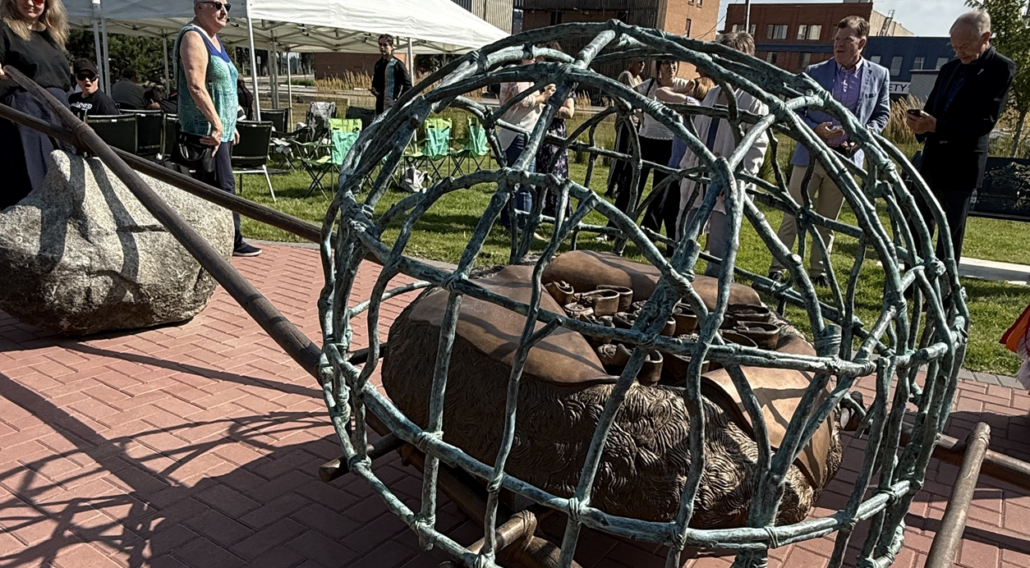
On August 23, I was in Prince Albert for the dedication of Passage Home, a new bronze monument and healing garden by Saulteaux artist Dr. Mary Longman. The work has been a long time coming. It grew out of Prince Albert’s public art policy, adopted in 2016, and years of work by the city’s Public Art Working Group, Longman, Common Weal Community Arts, and many others. Passage Home commemorates survivors of residential schools, day schools, and the Sixties Scoop, while creating a permanent public place for remembrance, grief, reflection, and connection.
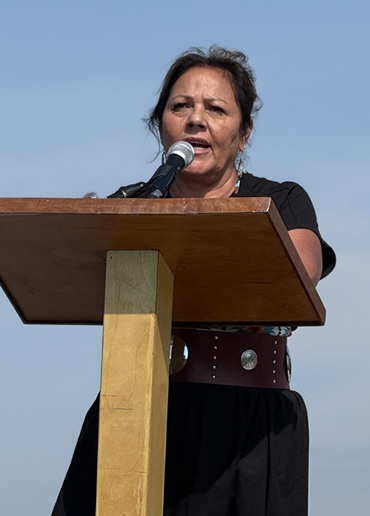
Saulteaux artist Dr. Mary Longman speaks at the dedication of Passage Home, photo by Em Ironstar, 2026.
I’ve been thinking about that morning quite a bit as this year’s National Day for Truth and Reconciliation approached, particularly because the dedication did not treat reconciliation as something that could be accomplished by unveiling a monument. Elder Liz Settee opened the ceremony by talking about her father, who survived residential school. “Had he not made it home, I would not be here today,” she said. In her prayer, she asked the Creator to make the garden a place where people could grieve honestly, through the tears, hurt, and anger that remain, while acknowledging the centuries of history that brought everyone to that place.
As the artist, Mary spent some time explaining the choices she made in creating Passage Home. The path through the garden winds like a river, connecting to the river nearby and to the waterways Indigenous people travelled between communities. She described it as a symbolic passage home for children returning to their places of origin, including those who died or went missing, and for the families and survivors who continue to grieve. At the center of the work is a travois. Mary explained how enclosed carriages could be built on a travois so children could travel safely, surrounded by soft bundles and belongings. There are small moccasins within the sculpture, and the garden itself will continue to change as the trees grow around it and sage grows below. Benches carry the words Give Children Roots, Love and Wings.
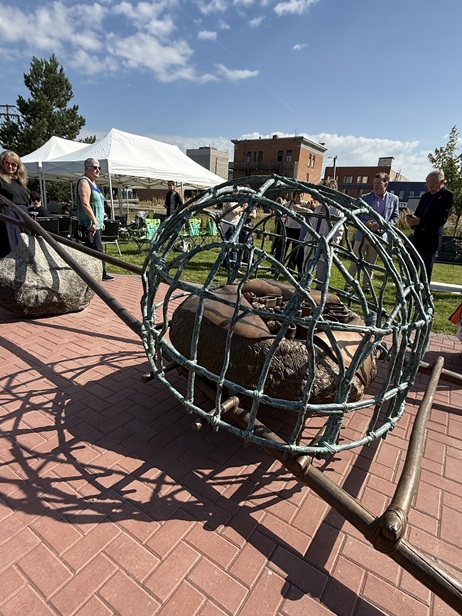
Saulteaux artist Dr. Mary Longman sculpture, Passage Home, a new bronze monument inside a new healing garden in Prince Albert. Photo by Em Ironstar, 2026.
What I especially want to carry forward from that day, though, is what Mary said after she finished explaining the artwork. She was very clear that Passage Home is not only about what happened to Indigenous children in the past. She used the dedication and the public platform it gave her to talk about the continued removal of Indigenous children from their families through child welfare systems. She shared her own experience of being in the system and the experiences of her family members. She then made four specific calls to action:
- The full implementation of federal legislation recognizing First Nations, Inuit and Métis jurisdiction over child and family services, including making the funding and processes connected to that legislation much easier for communities to access.
- Indigenous-led child and family centres in provincial capitals, led by Indigenous administrators and social workers who are able to oversee foster care placements, family supports and adoptions.
- Long-term settlements for Indigenous people who experienced prolonged foster care, particularly those who experienced abuse, neglect or exploitation while in care, and for greater accountability, investigation and answers when Indigenous children die in foster care.
- Her fourth and final call to action was about art and public memory. Mary pointed directly to the Truth and Reconciliation Commission’s Call to Action 79 and called for dedicated federal support for Indigenous artists creating Indigenous monuments and historic sites. She also spoke about the need to ensure that opportunities intended for Indigenous artists actually reach and are used by Indigenous artists.
This call to action feels particularly relevant to the Saskatchewan Arts Alliance. Passage Home exists in public space because an artist was given the opportunity, resources, and time to create a work grounded in her own knowledge and experience. It also demonstrates why it matters who gets to create the monuments and public artworks that tell our histories.
Chief Sean Longman of George Gordon First Nation spoke after Mary. The dedication took place during the 150th anniversary of the signing of Treaty Six, and he connected what we were gathered to remember with the promises made in the treaties and with present-day conditions. He spoke about his own experience attending residential school at George Gordon First Nation and the experiences of members of the Longman family. “When we signed Treaty, we never signed our children away or signed up for poverty,” he said. He went on to name some of the promises made through Treaty and pointed plainly to the distance between those promises and the realities many First Nations people experience today.
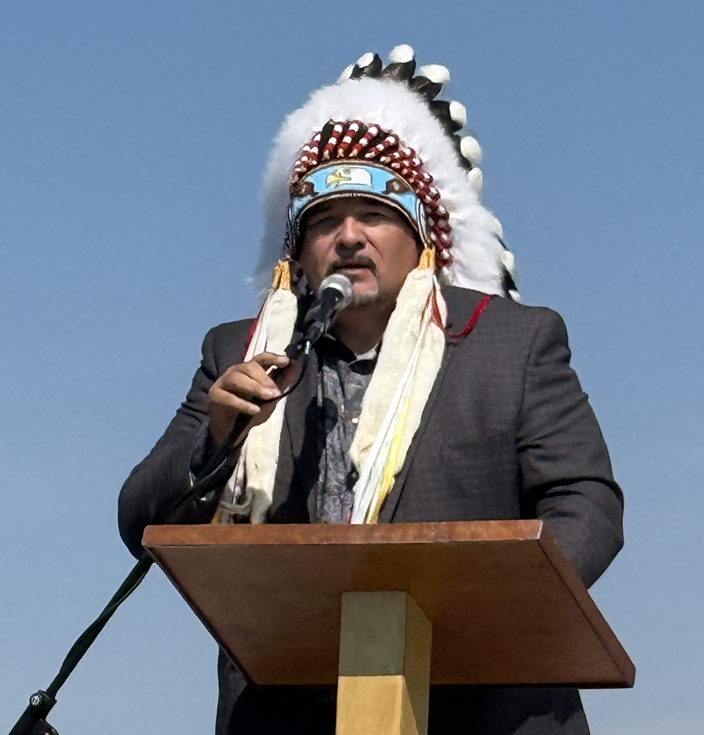
Chief Longman speaks at the dedication of artwork Passage Home in Prince Albert. Photo by Em Ironstar, 2026.
On the National Day for Truth and Reconciliation, there will understandably be a great deal of attention paid to remembering residential schools and the children who were taken from their families and communities. One of the things I took away from Passage Home is that remembering also requires us to pay attention to what people are telling us about the present. Mary did not leave the people gathered in Prince Albert with a general request to reflect or reconcile. She gave us specific things she believes need to change.
SAA has a platform and networks across Saskatchewan’s arts community, and one small thing we can do with them is help those calls travel further. So today, alongside remembering what Passage Home commemorates, we wanted to amplify what Mary asked people to hear at its dedication: support Indigenous jurisdiction over the care of Indigenous children; make the systems and resources intended to support that jurisdiction genuinely accessible; address the experiences of Indigenous people harmed in foster care and demand accountability when children die in care; and create meaningful, dedicated opportunities for Indigenous artists to tell Indigenous histories in public space.
Those calls do not begin or end on September 30. They came from the artist who created Passage Home, standing beside a work she spent years bringing into the world. They deserve to keep travelling beyond the people who were there to hear them that day.
Em Ironstar
Executive Director
Saskatchewan Arts Alliance

